
You’ve just finished loading the dishwasher after dinner, or perhaps the washing machine has completed its final spin cycle. The house is quiet, and then suddenly - BANG! A loud, jarring noise erupts from within your walls, sounding like someone took a hammer to your plumbing. If this scenario sounds familiar, you're likely experiencing a common but potentially damaging issue known as water hammer.
Here in McCalla, as the October nights begin to cool, we often see an increase in calls about this exact problem. Changes in water temperature and household routines can make these noises more prominent. It's a sound that's more than just an annoyance; it’s a distress signal from your home's plumbing system. Understanding the water hammer signs is the first step toward protecting your pipes from long-term damage.
Common Signs and Symptoms
Water hammer, or hydraulic shock, doesn't always manifest as a single, loud bang. It can present in several ways, and identifying the specific symptoms is key to a proper diagnosis. In my 14 years as a mechanical systems specialist, I've seen these issues range from subtle to severe. Here’s what our technicians recommend you listen and look for:
- A Single, Loud Bang: This is the classic symptom. It most often occurs immediately after a fast-closing valve shuts off the water supply, such as those in washing machines, dishwashers, or some modern single-lever faucets.
- Multiple Rapid Banging or Rattling Sounds: Sometimes, instead of one loud bang, you'll hear a series of noises that sound like pipes rattling or vibrating vigorously inside the walls. This often happens as the shockwave reverberates through the system.
- Shuddering Pipes: You might feel a shudder or vibration through the floor or walls when a faucet is turned off quickly. This is the physical manifestation of the pressure wave traveling through the pipes.
- Pipes that Visibly Shake: In unfinished basements or crawlspaces, you may be able to see the pipes themselves shake or jerk at the moment a valve closes.
- Noise When No Water is Running: In rare cases, pressure fluctuations from the municipal supply or a faulty pressure regulator can cause noises even when your fixtures are off.
If you're hearing banging pipes in McCalla, pay close attention to when it happens. Does it only occur when a specific appliance is running? Is it more common when the sprinkler system shuts off? These clues are invaluable for diagnosing the root cause.
What Causes This Problem
To understand water hammer, it helps to think of the water flowing through your pipes not just as a liquid, but as a moving mass with momentum. When you open a faucet, a long column of water starts moving. When you shut that faucet off, the entire column has to stop. If the valve closes slowly, the water has time to decelerate gracefully. However, if the valve slams shut, that moving column of water crashes to a halt, sending a high-pressure shockwave backward through the plumbing. This is the “hammer” you hear.
Several factors contribute to this phenomenon, especially in the types of homes common to our area.
- Fast-Closing Valves: This is the number one culprit. Modern appliances like dishwashers and washing machines use electronic solenoid valves that can snap shut in a fraction of a second. This is why it’s so common that pipes bang when washer shuts off. Ice makers in refrigerators are another frequent source.
- High Water Pressure: If your home's overall water pressure is too high (generally above 80 PSI), it amplifies the force of the shockwave. The water has more mass and is moving faster, so the resulting crash is much more violent.
- Plumbing in 1990s-2000s Homes: Many homes in McCalla were built during the 1990s and 2000s. These large, single-family homes often have long, complex runs of copper or CPVC piping. While these systems were robust for their time, they were not always designed with the ultra-fast-closing valves of today's appliances in mind. The long, straight pipe runs allow the water to build up significant momentum, making water hammer more likely.
- Failed Air Chambers: Older plumbing systems often included vertical sections of capped pipe near fixtures, called air chambers. These were designed to trap a pocket of air that would act as a cushion for the shockwave. Over time, this air can become absorbed into the water, rendering the chamber useless and waterlogged.
- Insecure Pipes: If the straps holding your pipes to the framing inside walls or floor joists have become loose, the pipes can move and bang against the wood when the shockwave hits, making the noise much louder.
When to Call a Professional
While the internet is full of DIY advice, addressing water hammer correctly often requires professional expertise. An incorrect fix can be ineffective or, worse, lead to new problems like leaks. The key question is how to stop water hammer noise safely and permanently.
Here's when it's time to contact a qualified professional:
- If the Banging is Sudden and Severe: A new, loud banging noise could indicate a significant change in your system, like a failed pressure-reducing valve (PRV). This requires immediate attention to prevent damage to pipes and appliances.
- If You Suspect High Water Pressure: Our technicians use calibrated gauges to test your home's static water pressure. If it's too high, adjusting or replacing the PRV is a job for an experienced professional. This is not a simple DIY task, as improper adjustment can cause its own set of problems.
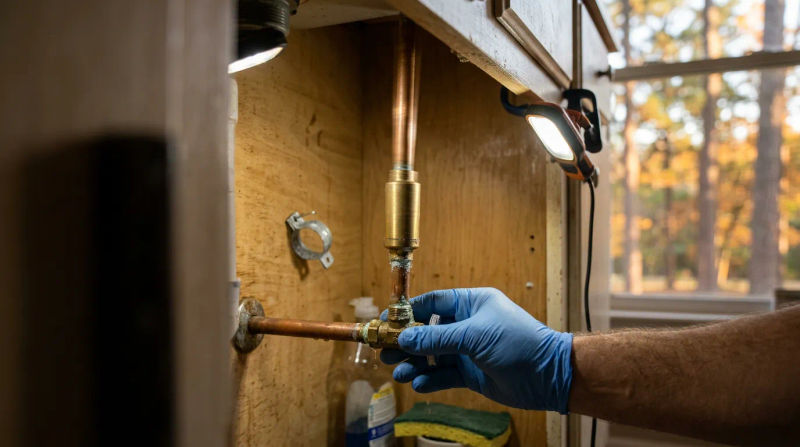
- To Install Water Hammer Arrestors: The most common modern solution is installing mechanical water hammer arrestors. These are small devices with a piston and a permanent air or gas charge that absorb the pressure spike. While they look simple, their effectiveness depends entirely on correct placement and installation. A professional will know exactly where in the plumbing system to install them - usually as close to the offending valve as possible - for maximum effect.
- If You Can't Locate the Source: If the banging seems to come from multiple places or you're unsure which appliance is the cause, a systematic diagnostic approach is needed. Our crews are trained to methodically trace the issue back to its source, saving you the guesswork and frustration.
- If You See Signs of Leaks: If you notice any moisture, water stains, or dripping near the noisy pipes, it's a clear sign that the force of the water hammer may have already compromised a fitting or joint. This requires immediate professional repair.
Securing a few loose pipe straps in an accessible crawlspace is a reasonable homeowner task. However, for a reliable, long-term solution, especially one involving pressure regulation or the installation of arrestors, relying on an organized workflow from experienced professionals is the safest and most effective route.
Conclusion
The sound of banging pipes is your home's way of telling you that its plumbing system is under stress. While it might just be an intermittent annoyance now, consistent water hammer can weaken pipe joints, damage valves, and eventually lead to costly leaks inside your walls. Addressing the problem early is always the best course of action.
With the holiday season approaching, now is the perfect time to resolve these issues before your home is filled with guests and your plumbing system is working overtime. By understanding the causes and recognizing the symptoms, you can take the right steps to quiet those pipes and protect your investment for years to come.
If you notice any of these signs, contact a local plumbing professional for an inspection.